Designing for Wildfire Smoke and Extreme Heat in the Okanagan
By Brett Sichello ·
The climate is changing. We have all seen it, and lately many of us have experienced it through wildfires, smoke, flooding or punishing heat waves. A home can be designed to respond.
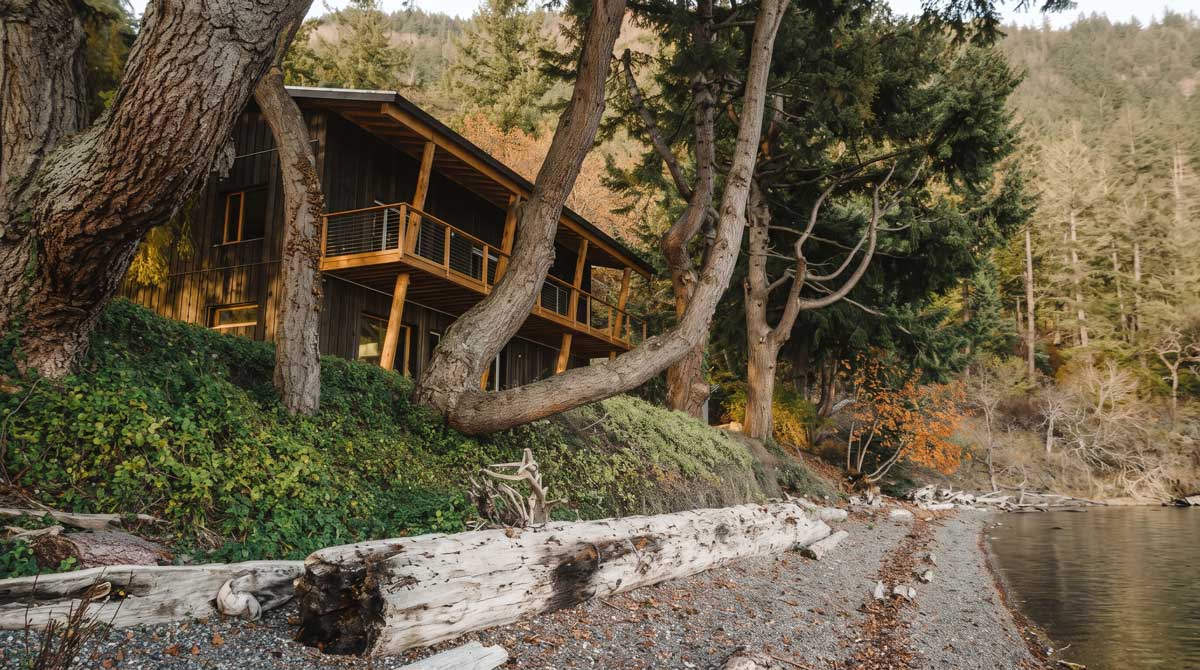
Start with an airtight envelope
By meticulously detailing an airtight building envelope, we limit wildfire smoke from getting into a home’s interior. The same continuous thermal envelope and triple-glazed windows also slow heat gain during heat waves.
Then filter the fresh air
That is only half the job, because nobody can live in a sealed bubble. A home needs fresh air, so we use a layered approach to ventilation:
- Everyday and fire season: a heat or energy recovery ventilator (HRV or ERV) paired with a MERV 13 filter during fire season, fine enough to capture microscopic particulate matter such as soot and ash from the incoming fresh air.
- Extreme events: standalone HEPA-level air filters (MERV 19 to 20), one per floor, to deal with the particles the ventilation filter does not catch.
Measure it, do not assume it
Filtering is not enough on its own. Everything must be measured, so that we know the filters are working. Every home includes an indoor air quality monitor that tracks:
- PM2.5 (fine particulate matter)
- temperature and humidity
- VOCs (volatile organic compounds)
- CO₂ (carbon dioxide)
The monitor is tied into the home’s smart home system, typically Home Assistant. It alerts the homeowner when a filter needs changing or when the ERV flow rates need adjusting.
Proven, not promised. The only way to know a building is delivering is to measure how it behaves in real time.
For more on how we design for site conditions, see the FAQ.